


How to Light High Ceilings and Stairwells

Updated: Aug 24
For a high ceiling or stairwell, choose a fitting with enough vertical presence to fill the space without obstructing the landing or walkway. Cascading chandeliers, staggered pendants and sculptural long-drop fittings can work particularly well. The important decisions are scale, drop, how the fitting looks from more than one floor, and how it will be maintained once installed.
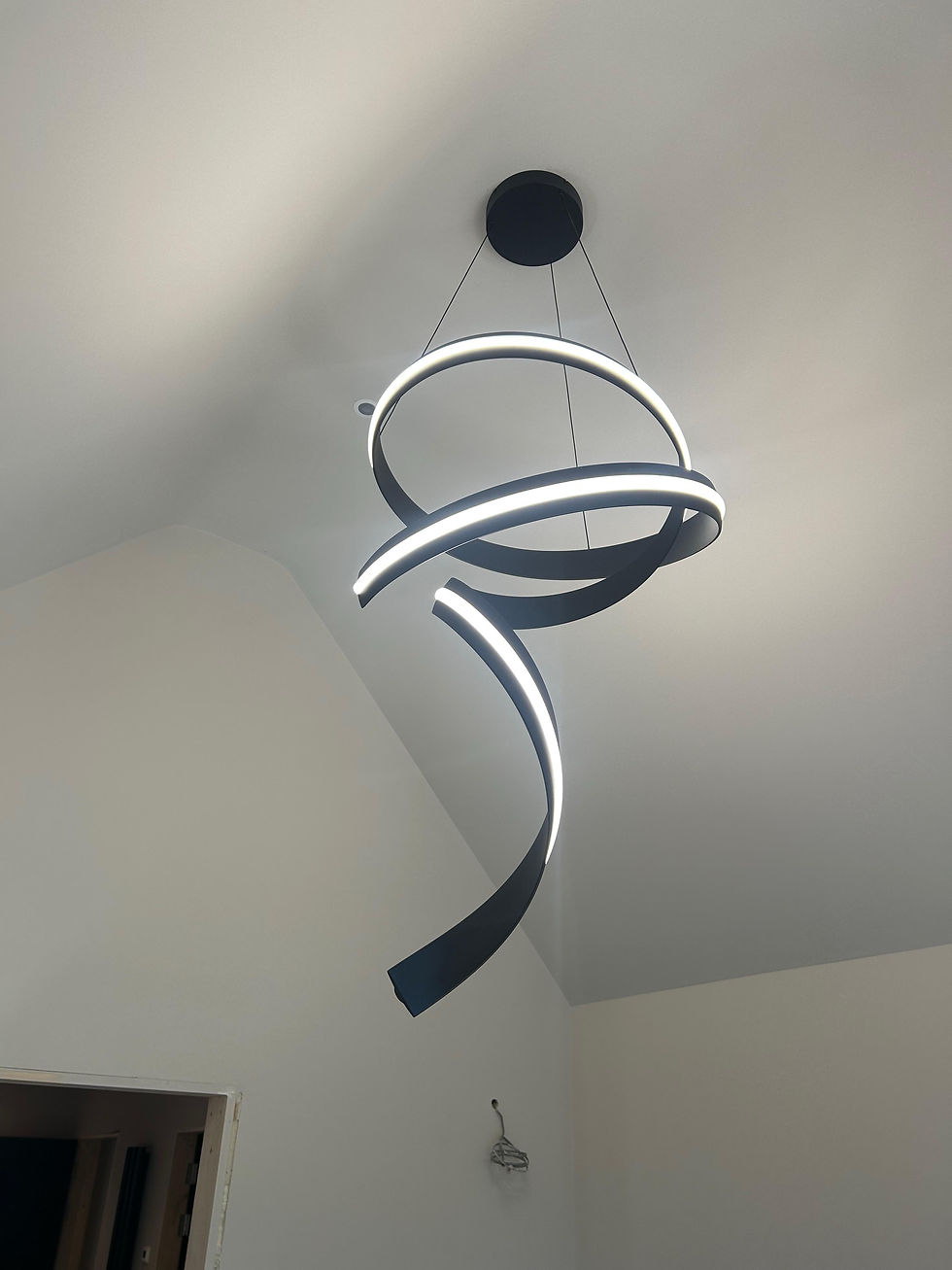
Why tall spaces need a fitting with vertical presence
High ceilings, galleried landings and stairwells give you more room to use lighting as part of the architecture. A short fitting can disappear into a large void, while a longer chandelier, cluster or staggered pendant arrangement can connect the upper and lower parts of the space and create a focal point that is visible from several angles.
How do I choose the right drop for a stairwell light?
Start with the full floor-to-ceiling height and identify where people will walk beneath or beside the fitting. The lowest point needs to feel visually connected to the lower floor while still leaving comfortable clearance around landings and circulation routes. The best drop is therefore specific to the stairwell rather than a standard measurement copied from another room.
If you are deciding between fitting sizes, our chandelier and pendant sizing guide explains the general relationship between room size, ceiling height and drop.

Should a stairwell light be visible from both floors?
Usually, yes. A stairwell fitting is experienced while approaching the stairs, climbing them and looking back from the upper landing. That makes proportion and viewing angle more important than in an ordinary room. Before choosing, consider how the fitting looks from the entrance, from halfway up the stairs and from the landing above.
Plan maintenance before installation
A dramatic fitting is less successful if changing a lamp or cleaning it later becomes impractical. Before the final position is agreed, think about access, bulb life, how the fitting will be cleaned and whether a rise-and-fall or other accessible arrangement is appropriate. For a high or difficult position, discuss installation and future access with the electrician before the fitting goes up.
Layer light at the lower level too
One high pendant rarely needs to do every job. Wall lights, lamps or other lower-level sources can add warmth and useful light around the hall and landing while the main fitting provides the visual focus. This is especially helpful in tall spaces where relying on a single ceiling light can leave the lower part of the room feeling flat or uneven.
What if the hallway ceiling is low but the stairwell is tall?
Treat the two areas differently. A lower hallway may suit a flush or semi-flush ceiling light and wall lighting, while the stairwell void can take the longer statement piece. Trying to make one fitting solve both spaces often compromises one of them.
See real high-ceiling and stairwell installations
We have photographed a number of fittings after installation in customers' homes across Surrey, Berkshire and Hampshire. You can see more stairwell and vaulted-ceiling examples in our customer installations gallery.
Bring the space with you
If you have a tall hallway, landing or stairwell to light, bring photographs, the floor-to-ceiling height and key measurements to the Camberley showroom. Seeing suitable fittings switched on and at full scale makes it much easier to judge whether they have enough presence for the space.
Illuminations of Camberley · 66–68 High Street, Camberley, Surrey GU15 3RS · Monday–Saturday 9am–5:30pm · No appointment needed.
Shop this advice
Ready to look at fittings? Browse the relevant Illuminations Direct collections, then collect from our Camberley showroom:
Bring your project to the showroom
Planning a room or renovation? Read about our free showroom lighting-planning help and send photographs, plans, ceiling heights and measurements before you visit.
Comments