


Layered Lighting: Ambient, Task and Accent Light Explained

Updated: Oct 2
Layered lighting combines light for moving around, light for particular activities, and light that highlights features. These are usually called ambient, task and accent lighting. Thinking about each job helps you plan a room that works for everyday use and feels comfortable in the evening; one fitting may contribute to more than one layer.

When does a room benefit from more than one light?
A central ceiling fitting may provide enough general light in a small room, but it may not put light where you read or prepare food. Start with the activities and furniture positions. Add a separate source where you need better task visibility, a brighter corner or a gentler evening setting.

The three layers
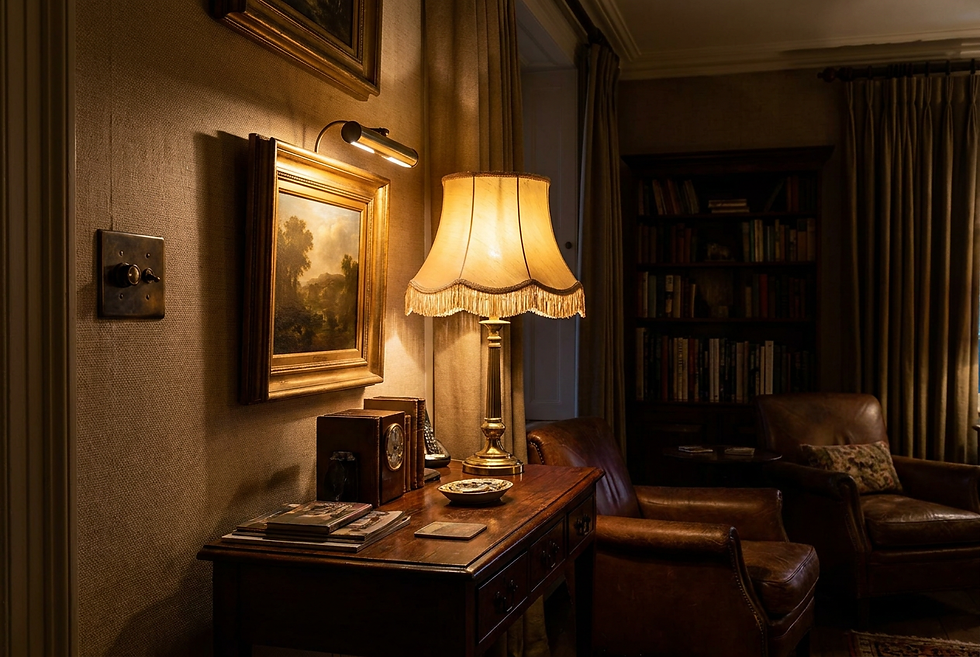
Ambient lighting provides general illumination for moving around. Task lighting puts light onto an activity, such as a book, desk or worktop. Accent lighting draws attention to a feature, such as artwork or textured walls. A table lamp may add both general light and decorative interest; you do not need three separate fittings simply to satisfy these labels.

A worked example
In a living room, a pendant or wall lights might provide general illumination. A reading lamp beside a chair can put light on the page, while a picture light highlights artwork. Use the combinations that suit the activity: more general light for tidying, a reading light when needed, and a softer setting for conversation.
The role of dimmers
Separate switching lets you choose which lights are on; compatible dimmers also let you adjust their output. Check the lamp or fitting and the control as a combination before buying. Our LED dimming and flicker guide explains what to check with your supplier and electrician.
Check comfort from the places you actually sit
Before finalising positions, look towards the fittings from the sofa, dining chairs and desk. Notice exposed bright lamps, reflections in the television and shadows across a page or worktop. Adjusting a shade, light position or direction may be more useful than simply increasing brightness.
ERCO's residential lighting guidance describes combining general illumination, accents and direct and indirect light. It also explains how illuminating walls affects the impression of brightness. In a home, this provides a useful reason to consider the room's surfaces as well as its ceiling fittings.
See layering at work
Layered lighting is best understood by seeing it. Our Camberley showroom is arranged in room settings with fittings lit as you would live with them, so you can watch a scheme shift as each layer comes on. The only way to really know is to see it glowing.
See layered schemes switched on in real Surrey, Hampshire and Berkshire homes in our customer installations gallery.
Shop this advice
Ready to look at fittings? Browse the relevant Illuminations Direct collections, then collect from our Camberley showroom:
Bring your project to the showroom
Planning a room or renovation? Read about our free showroom lighting-planning help and send photographs, plans, ceiling heights and measurements before you visit.
Updated 9 September 2026. Room examples are practical suggestions from Illuminations; the linked ERCO guidance explains the underlying lighting principles.
Comments